Lab Handling
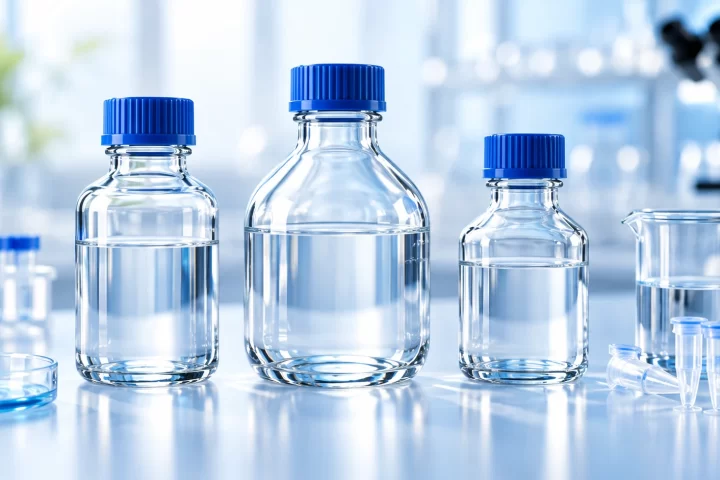
Bacteriostatic Water for Peptides: When and How to Use It
When bacteriostatic water suits peptide reconstitution, which peptides need caution with benzyl alcohol, how to choose the volume, and what the evidence shows.
BEHIND THE ARTICLES
Areas of expertise: Peptide lead discovery & screening, structural modification & stability optimization, pharmacodynamics & mechanism of action
Lab Handling
When bacteriostatic water suits peptide reconstitution, which peptides need caution with benzyl alcohol, how to choose the volume, and what the evidence shows.
Peptide Profiles
Tesamorelin is GHRH(1-44) with an N-terminal trans-3-hexenoyl group, the only GHRH analogue licensed for a specific indication. Structure, trials and handling.
Peptide Profiles
GHK-Cu is the copper(II) complex of the plasma tripeptide Gly-His-Lys. Its structure, how it binds copper, what cell and gene studies report, and lab handling.
Peptide Profiles
Epithalon (Ala-Glu-Asp-Gly) was derived from the pineal extract epithalamin. Its structure, telomerase and lifespan studies, and how to read that literature.
Peptide Profiles
CJC-1295 is a modified GHRH(1-29) analogue; the DAC version binds albumin for a 6–8 day half-life. Structure, human GH/IGF-I data, detection and handling.
Peptide Profiles
CJC-1295 (no DAC) acts on the GHRH receptor and ipamorelin on the ghrelin receptor. Why they are paired, what each has been shown to do, and blend lab handling.
Testing & Quality
Lyophilized peptides are freeze-dried powders made for stability. How freeze-drying works, what the powder contains, net content and reading the COA.
Comparisons
NAD, NAD+ and NADH are the same coenzyme in different states. What the plus sign means, which form is oxidised, and why the ratio matters in the lab.
Comparisons
N-acetyl Semax amidate caps both ends of the Semax heptapeptide. What acetylation and amidation change, how masses differ, and what the literature supports.
Comparisons
N-acetyl Selank amidate caps the Selank heptapeptide at both ends. How the modifications affect mass, charge and degradation, and what the evidence supports.
Lab Handling
How to store lyophilized peptide powder: why −20 °C is standard, how moisture and light shorten shelf life, room-temperature tolerance and opening cold vials.
Peptide Profiles
Yes: GLP-1 is a ~30 amino acid peptide hormone from proglucagon. How native GLP-1 differs from long-acting analogues and co-agonist peptides.