Peptide Profiles
How Does Tirzepatide Work? Imbalanced Dual Agonism
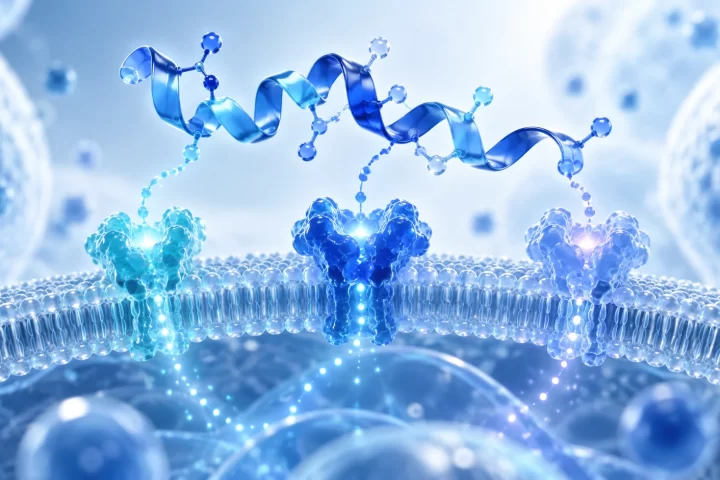
Tirzepatide engages GIP and GLP-1 receptors unequally and with signalling bias. The 2020 paper that established this, and why it matters in the lab.
Peptide Profiles
Tirzepatide engages GIP and GLP-1 receptors unequally and with signalling bias. The 2020 paper that established this, and why it matters in the lab.
Comparisons
Cagrilintide acts on amylin and calcitonin receptors, not incretin receptors. Why it is paired with GLP-1 agonists, what CagriSema showed, and blend handling.
Comparisons
Tesamorelin works through the GH axis; incretin peptides through GIP, GLP-1 and glucagon receptors; MOTS-c through AMPK. Four different mechanisms compared.
Research Reviews
Tirzepatide's half-life is about 5 days, from a population PK model of 19 pooled studies. How albumin binding produces it and what it means for study design.
Comparisons
Orforglipron is a non-peptide taken by mouth; tirzepatide is an injected dual-receptor peptide with a measured 5-day half-life. A full comparison.
Comparisons
Two of these three engage the glucagon receptor and one engages GIP instead. The receptor split, the trial records and what it means in the lab.
Comparisons
Retatrutide adds glucagon receptor activity to tirzepatide's GIP/GLP-1 agonism. Receptors, half-life, status and trial endpoints compared.
Testing & Quality
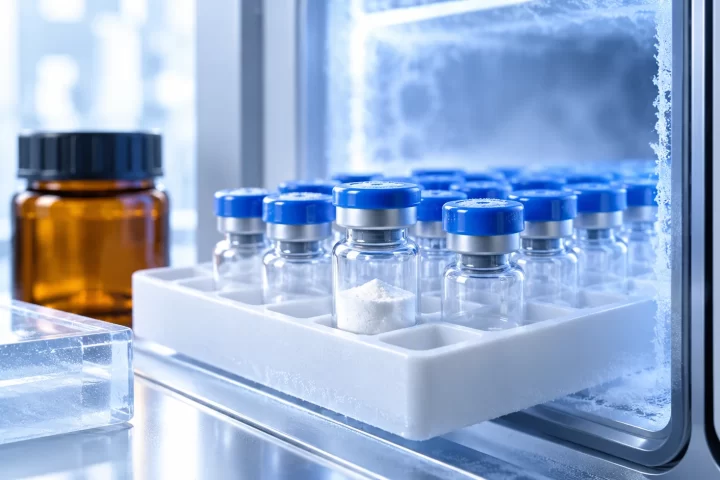
What lyophilized tirzepatide powder and solution should look like, what colour changes mean, and how identity, purity and content are tested.
Lab Handling
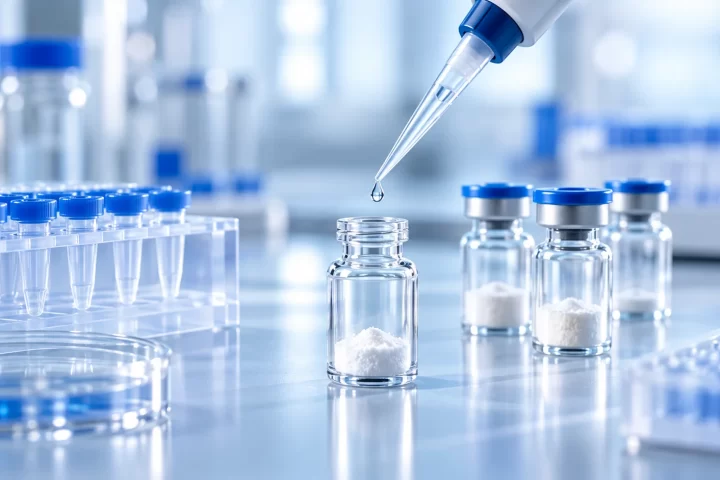
Reconstituting research tirzepatide: stock solutions, mg/mL to micromolar conversion at 4813.5 Da, dilution for cell assays, low-binding plastics and storage.
Peptide Profiles
Yes: GLP-1 is a ~30 amino acid peptide hormone from proglucagon. How native GLP-1 differs from long-acting analogues and co-agonist peptides.
Peptide Profiles
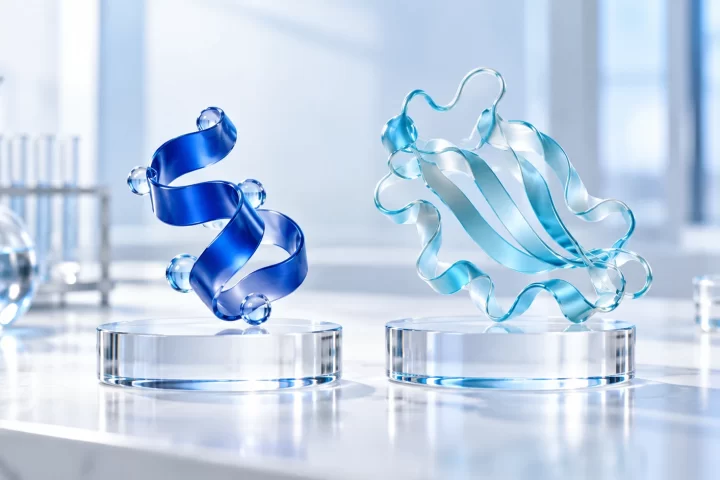
Tirzepatide is a 39-residue lipidated peptide acting on GIP and GLP-1 receptors. Its structure, discovery, pharmacokinetics and key trial data.